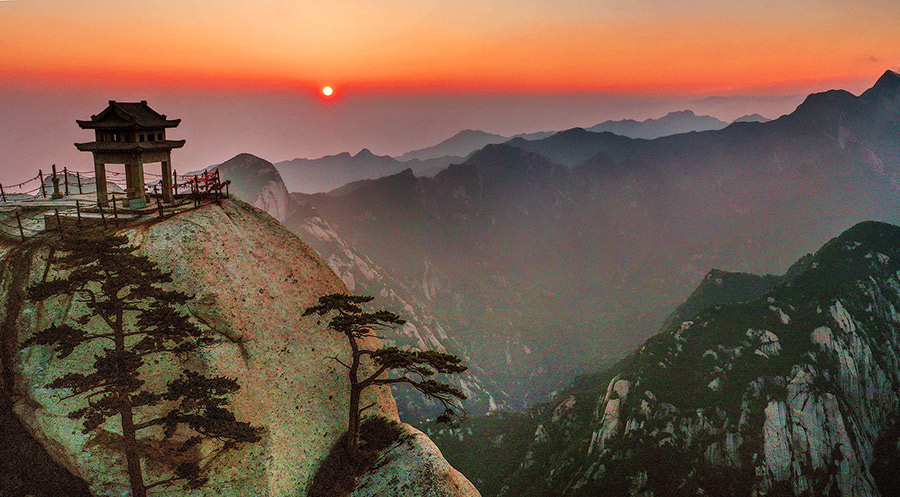
Huashan Mountain
Introduction
Huashan Mountain, located in Huayin, Weinan city, Shaanxi province, is one of China's Five Great Mountains. Known for its steep cliffs, rugged terrain, and notable views, it has long held significance in Chinese culture and history. The mountain's natural features, combined with its cultural and historical associations, make it a popular destination for visitors. With over 210 identified natural and cultural scenic spots, Huashan Mountain provides a range of experiences, from landscapes to climbing opportunities.
The mountain features five main peaks, each with distinctive characteristics. These include the East Peak (Peak of the Rising Sun), North Peak (Peak of Cloud Terrace), West Peak (Peak of the Lotus), South Peak (Peak of Wild Geese), and Central Peak (Peak of the Jade Maiden). These peaks offer diverse views and are subject to seasonal phenomena such as sunrises, morning mist, and cloud formations.
Huashan Mountain is classified as an AAAAA scenic spot, the highest rating for tourist attractions in China, making it a destination that can be visited year-round. Its combination of natural features, historical importance, and cultural significance contribute to its appeal for travelers interested in China's heritage.
Geography and Location
Huashan Mountain is situated in Huayin, part of Weinan city in Shaanxi province, Northwest China. As one of the Five Great Mountains, it occupies a prominent position in the country's geography and cultural landscape. The mountain is part of the Qinling mountain range, which acts as a geographical divider between northern and southern China.
The mountain's elevation reaches 2,154 meters at its highest point. Its five main peaks are distributed across the mountain, each presenting specific geological characteristics and views. The East Peak, known as the Peak of the Rising Sun, offers sunrise viewpoints. The North Peak, or the Peak of Cloud Terrace, is defined by cliffs on three sides. The West Peak, called the Peak of the Lotus, is named for its shape. The South Peak, the Peak of Wild Geese, is the highest, standing at 2,083 meters. The Central Peak, the Peak of the Jade Maiden, connects the east, west, and south peaks.
The mountain's terrain is characterized by steep slopes, rock formations, and ravines, making it a challenging location for climbers. Over 70 minor peaks surround the main peaks. The mountain's topography and elevation contribute to variations in climate and ecosystems, offering visitors different experiences depending on the season.
Huashan Mountain is accessible from nearby cities, making it a destination for domestic and international tourists. Its location in Shaanxi province places it within a region with historical and cultural sites.
Historical Significance
Cultural and Religious Importance
Huashan Mountain has been a site of cultural and religious importance for centuries. It has been a location for Taoist worship and pilgrimage, considered one of the sacred mountains in Taoism. Taoist temples and shrines are located across the mountain.
The mountain's terrain and views have inspired poets, artists, and writers throughout Chinese history. Classical Chinese poems and paintings depict the mountain's peaks and landscapes, capturing its cultural significance.
Huashan Mountain's cultural importance extends beyond Taoism, as it has been associated with other religious and philosophical traditions. The mountain's natural features and climbing opportunities have been interpreted in the context of personal growth.
Historical Sites and Artifacts
Huashan Mountain contains historical sites and artifacts that reflect its heritage. These include Taoist temples, stone inscriptions, and relics dating back to various dynasties. These sites offer insights into the region's history, culture, and spiritual practices.
One historical site is the Chang Kong Cliff Road, a narrow walkway built along the cliffs. This path has been used by pilgrims and visitors.
Other sites include the Jade Spring Temple, dedicated to the Taoist deity Chen Tuan, and the Xiyue Temple. These temples, along with other historical landmarks, contribute to the mountain's cultural and spiritual history.
Tourism
Huashan Mountain is a destination for tourists interested in natural features, cultural sites, and outdoor activities. The mountain offers hiking, sightseeing, and exploration of historical sites. Its five main peaks provide views of sunrises, morning mist, and cloud formations.
The mountain is classified as an AAAAA scenic spot, the highest rating for tourist attractions in China, making it a destination that can be visited year-round. Autumn and early winter are often considered favorable times to visit.
Visitors can access the mountain through cable cars and hiking trails. The cable cars provide a means of reaching the peaks, while the trails offer climbing opportunities. The Chang Kong Cliff Road is an attraction for adventurous visitors.
Huashan Mountain's facilities are designed to accommodate visitors. The scenic area has designated opening hours, ticket prices, and discounts for specific groups. Visitors are advised to wear comfortable clothing, bring water, and prepare for the physical demands of climbing. Smoking is prohibited.
The mountain's official website provides information about ticket booking, opening hours, and travel tips. Huashan Mountain's combination of natural features, historical importance, and cultural attractions make it a destination for travelers exploring China's heritage.
Legends and Folklore
Huashan Mountain has legends and folklore that contribute to its appeal. Many of these stories are rooted in Taoist traditions and reflect the mountain's spiritual significance. One legend involves the Jade Maiden, a figure associated with the Central Peak. According to the story, the Jade Maiden descended to the mountain to practice Taoist meditation.
Another tale is the legend of Chen Tuan, a Taoist figure who is believed to have lived on the mountain. Chen Tuan is revered as a deity in Taoist tradition. His legacy is celebrated at the Jade Spring Temple.
The mountain is also associated with stories of bravery and adventure, related to its paths and cliffs. The Chang Kong Cliff Road is often featured in tales of climbers who overcame challenges to reach the mountain's peaks.
Huashan Mountain's legends and folklore contribute to its cultural richness and appeal.








